

3D and visual systems: when they help people understand a project
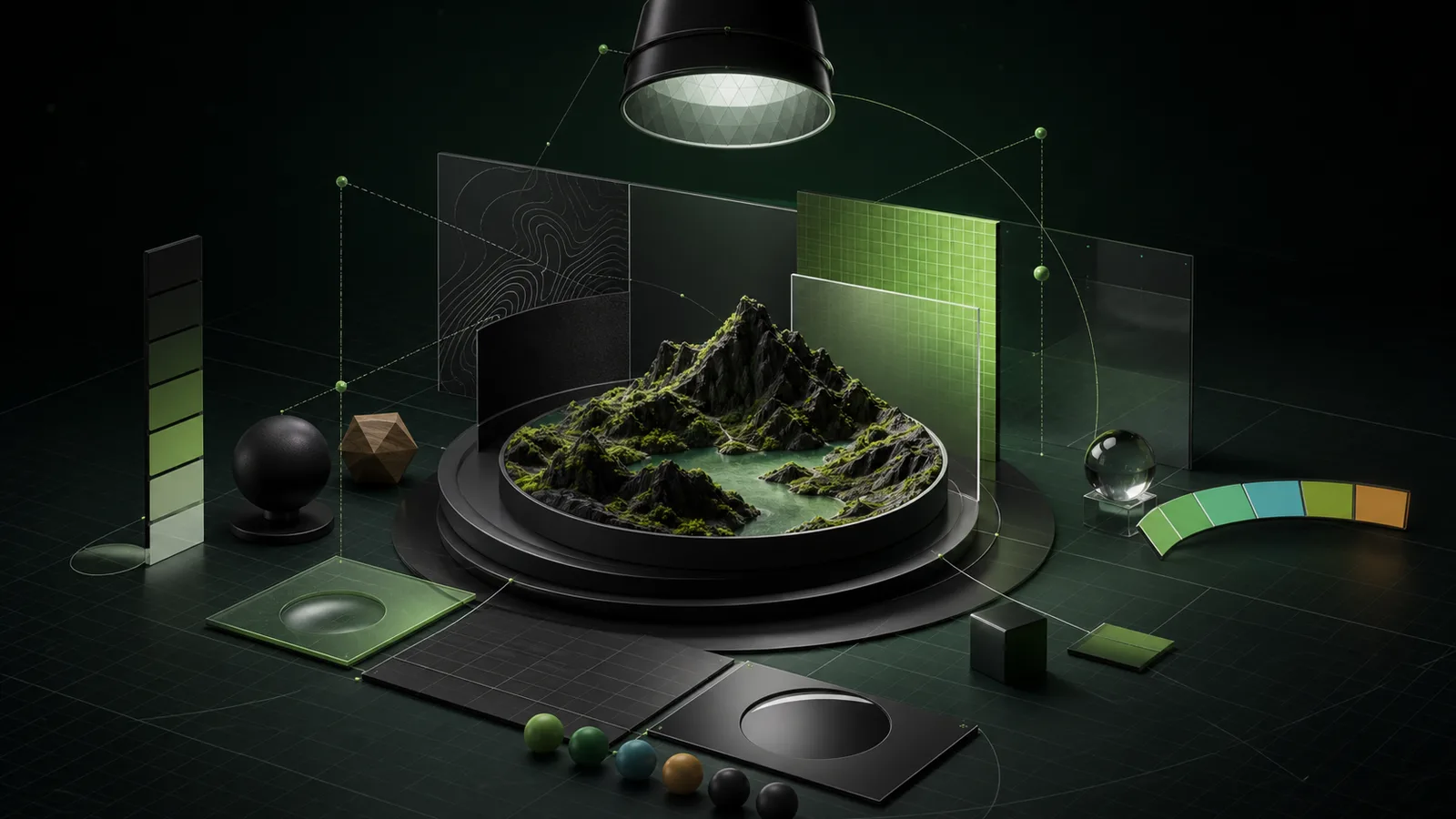
A well-made render is not automatically useful.
It becomes useful when it avoids a question, makes a constraint visible or lets someone decide without imagining everything from scratch.
That applies to a product, stand, browser-based environment, bid presentation or the identity of a technology project that would otherwise be difficult to explain.
Function comes before rendering
A visual can have very different jobs:
- show the scale of a space or relationship between objects;
- test materials, lighting, paths and readability before production;
- explain a technical system to non-technical people;
- keep a presentation, landing page and event coherent;
- make a product recognisable while it is still evolving.
Without one of those jobs, the risk is pleasant but interchangeable imagery. A visual system becomes strong when it keeps rules: palette, typography, framing, hierarchy, logo use, possible variations and things not to do.
3D is also a way to anticipate
For physical materials, events and immersive environments, modelling first can avoid errors that cost more in production than an hour in Blender. A mockup shows size, distance, proportion, reading points and brand presence. A 3D environment can do the same for paths, screens, meeting points and visual load.
In work for CGM Verse, creative direction included environment concepts, brand coherence, rendering, video, materials and collaboration with the Technical Director on assets and interactions. The boundary matters: the contribution concerns concept, visual outcome, experience and creative direction; it does not claim complete platform development.
Performance and use come before detail
A web or WebGL environment cannot be judged from a static preview alone. Browser, devices, loading time, readability, movement and what a person understands at first access all matter.
In immersive work, an object can be highly crafted and still be unhelpful if it slows everything down, fails to guide attention or needs instructions nobody will read. Quality lies in the relationship between function, identity and technical limits.
That is why 3D rendering and mockups and creative direction for virtual environments start with audience, context and the decision to support. Blender, Unity or a render come after that: they are ways to make an idea verifiable, not shortcuts to making it automatically interesting.